
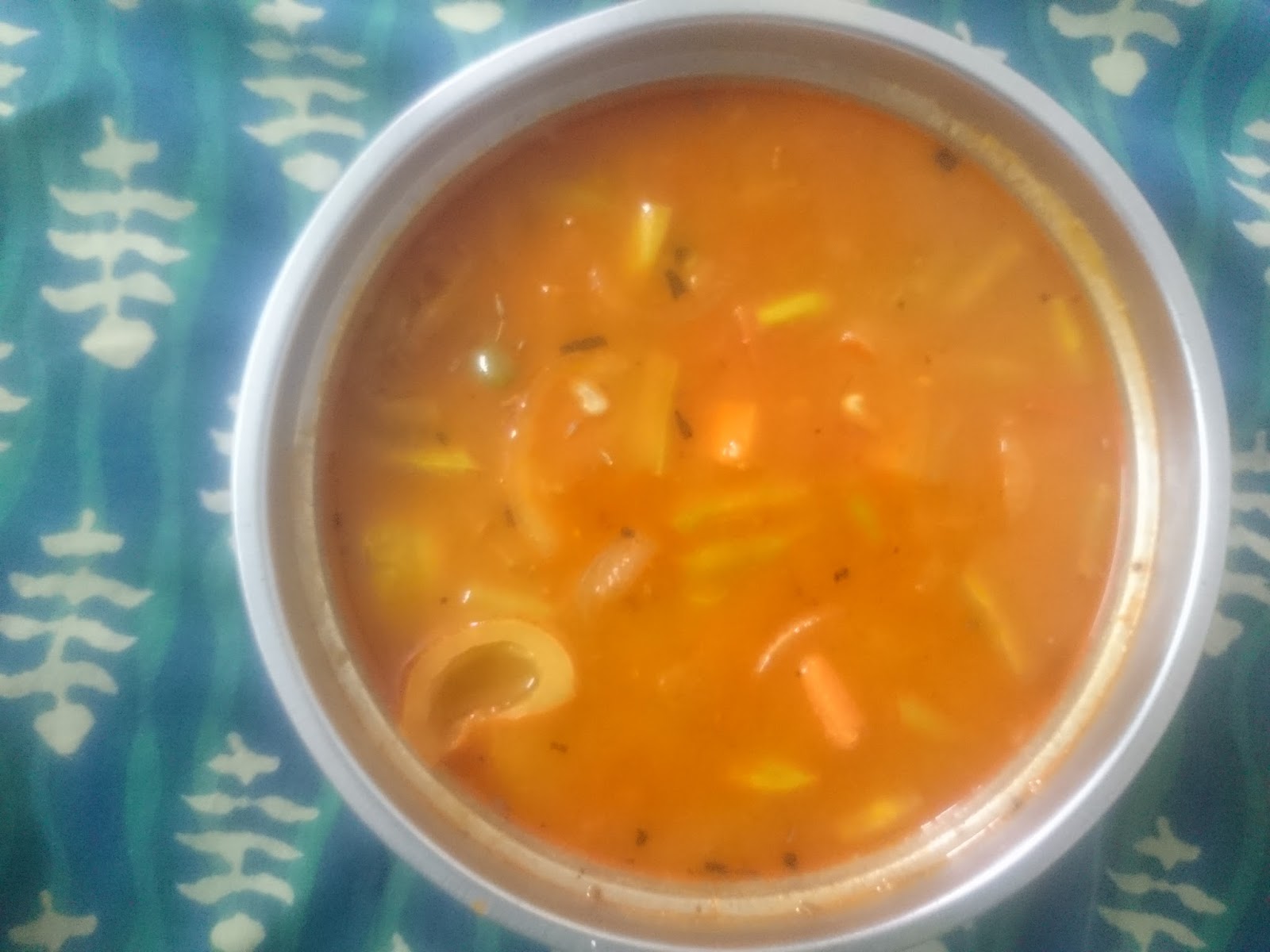
BEANS CARROT KARAKOZHAMBU


BEAN CARROT KARAKOZHAMBU
Ingredients:
beans and carrot cleaned and cut to 1" size-1 cup
onion-1 cut finely
tomato-2 chop finely
curry leaves, coriande leaves-1 tbsp chopped
chilli powder-2 tbsp depending on spiceness
salt as needed
oil-1tbsp
chutney dhal(roasted gram) powder-1 tbsp
turmeric powder-1/4 tsp
tamarind water-4tbsp
mustard seeds-1tsp
cumin seeds-1tsp
dry roasted methi seed powder-1 tsp
Method:
Heat pan and oil. Let mustard pop in oil. Add onions and fry till light golden colour. Add cumin seeds, tomato and turmeric powder. Saute and add salt and let the tomato cooked juicy and then add vegetables, coriander, curry leaves ,chilli powder and add little water and cook until the vegetables are cooked. I like half cooked vegetables little crunchy. So if you like that way you can stop when it is half done and all other chilli is cooked nicely. Now add tamarind paste or water and cook for 3 to 4 minutes or until a boil and then add the dhal powder and mix nicely. Remove from fire and add dry roasted and powdered methi seeds and serve hot.
Nutritional Info:
Has vitamin A, folic acid, vitamin c , fibre and other traces of vitamins and minerals.

Comments

Popular posts from this blog

MUDAKATHAN KEERAI / BALOON VINE PLANT

MUDAKATHAN KEERAI / BALOON VINE PLANT RECIPES The Tamil system of medicine has incorporated Ayurveda, Unani and Siddha system to treat a number of everyday problems with natural herbs and minimal side effects. One such herb is the Mudakathan keerai. The botanical name is Cardiospermum halicacabum, but it is commonly known as the balloon vine. Found locally in villages and peripheries of Tamil Nadu, it can be identified as a climber having balloon like fruits. The leaves, roots, seeds and the baby leaves of this plant are all used for kaleidoscopic medicinal purposes. It can be used both internally and externally. Mudakathan keerai or leaves has strong  anti-inflammatory  properties. It gives noticeable relief in patients of arthritis, joint pain and even gout patients. The oil made out of this herb can be used externally. The powder obtained from the leaves is mixed in popular south Indian dishes and is used for internal consumption. A combination of the two g...

INDIAN basic gravies

basic Indian gravies Kadhai gravy This is a gravy which is selectively used in Indian cuisine for making kadhai dishes only like kadhai paneer or sabz kadhai. The characteristic flavours of this gravy are sweet , sour , bitter , astringent, salt, spicy . All six flavours must be felt in this gravy to make it a complete dish. INGREDIENTS Tomatoes 1 kg Cream 100 ml oil 100 ml Ginger 20 gm garlic 20 gm green chilies 10 gm coriander 50 gm capsicum 100 gm ginger garlic paste 20 gm kadhai spices ,crushed (corriander seeds3 gm, fennel seeds2 gm, cumin seed2 gm, black pepper whole2 gm, red chili whole2 no) 10 gm red chili powder 5 gm turmeric powder 2 gm coriander powder 10 gm salt 20 gm kasoori methi powder 5 gm sugar 5 gm METHOD Heat oil, crackle the crushed spices , add garlic chopped and sauté till golden brown. Add half of ginger chopped and green chilies , sauté and then add capsicum purée. Cook continuously till the oil separates . Add ginger garlic past...

UGADHI (TELUGU NEW YEAR)PACHADI

UGADHI Ugadi is celebrated in many states like Maharashtra, Karnataka and Andhra Pradesh. Significance of Ugadi: The name "Ugadi" came from Yuga + Aadi which means "Beginning of a New age. It is believed that the creator according to Hinduism, Lord Brahma started his work of creation on the Chaitra suddha padhyami(Ugadi). Customs IN UGADHI Preparations for the festival begin a week ahead. Houses are given a thorough wash. Shopping for new clothes and buying other items that go with the requirements of the festival are done with a lot of excitement. On Ugadi Day, people wake up before the break of dawn and take a head bath after which they decorate the entrance of their houses with fresh mango leaves. The significance of tying mango leaves relates to a legend. It is said that Kartik (or Subramanya or Kumara Swamy) and Ganesha, the two sons of Lord Siva and Parvathi were very fond of mangoes. As the legend goes Kartik exhorted people to tie green mango leaves to ...